
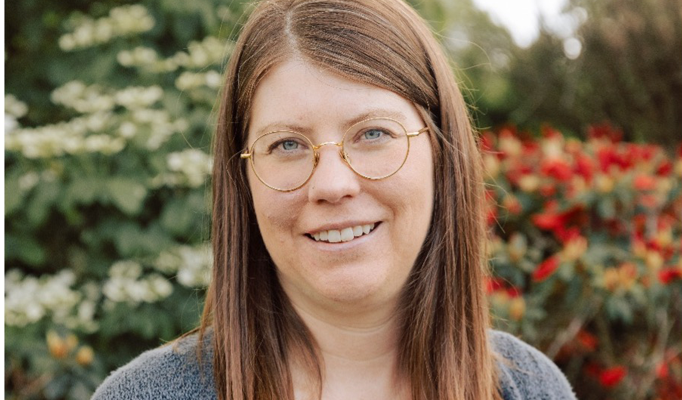
The newly passed Canadian Budget axed $2.7 billion in international aid over the next four years and Kentro’s Executive Director, Laura Solberg, is sounding the alarm for anyone who will listen. Canada is joining the United States, the United Kingdom and the European Union in cutting back. Laura is passionate about seeing people discover and live into the fullness of who they were created to be as individuals and in community. She is also passionate about the truth that investing globally creates a more stable world that will help Canada and charity organizations benefit on the world stage.
“Canadian Christians need to guard against the feeling of scarcity and fear permeating our culture,” Solberg says. “There’s a lot of misinformation out there about how international relief works. We need to embrace God’s character of justice, compassion, generosity, and love for our neighbour… and not let those realities be dictated by a border. Canadian and Christian values align in the area of compassion and care for the marginalized, and followers of Jesus need to lean into this. We want to come alongside Canadians to keep them looking outward. We are a gifted, resilient, and generous people.”
Kentro is the new brand name for the former Canadian Christian Relief and Development Association (CCRDA). It’s been around over 40 years and has built a track record of solid stewardship and donor care. Kentro is Greek for centre and portrays the focus of the group on growing a hub of collaboration for relief and development organizations to connect, share learnings, establish best practices, and ultimately work together to create more measurable change. A new Member Connect portal presents a user-friendly digital platform that offers a new way for Canadian individuals and organizations addressing poverty and justice to connect and work together both domestically and globally.
Allison Alley, President and CEO of Compassion Canada, says “Kentro’s more inclusive name, centralized hub, and new digital platform will help us work more effectively together across the international relief and development sector in Canada, ultimately empowering us to partner to affect positive change and reduce global poverty.”
But replacing $2.7 billion will not be easy. In 2021/22, Canada reached a peak of $7.6 billion in foreign aid given away. In the coming year there will be a cut of $470 million. Most of this is directed to multilateral organizations that distribute it globally, but significant bilateral aid also goes to countries like Ethiopia, Haiti, Tanzania, and now Ukraine, who is the largest recipient with $22 billion in economic, military, and humanitarian aid since 2022.
70 member organizations in Canada, the United States, and Europe, now network with combined efforts of more than $800 million annually to address poverty and injustice locally and globally. The situation in Ukraine has drawn their attention, along with challenges throughout Africa, and now in Canada with housing challenges. The organization believes that global development today is more complex than ever and requires greater collaboration for increased impact. There is strong solidarity between members in the work they do.
Solberg says that “Kentro’s new Member Connect platform helps people and organizations connect in real-time and work together to respond with a coordinated effort to urgent situations like the unfolding humanitarian crisis in Ukraine… The platform acts as a digital hub … to partner together, promoting excellence and accountability in the Canadian Christian relief and development sector, and creating greater impact as we move from disconnection to connection, acting in a united response, rather than as individual actors.”
When asked why the CCRDA had changed its moniker to Kentro, Solberg said that while the former name was descriptive, it became meaningless because people tripped over the name, not remembering it, forgetting the acronym, and becoming disengaged. The new name and vision will give opportunity to build a new brand and a wider network of collaborators. “We were virtual before Covid made everyone get online and we have the goodwill of our stakeholders as we broaden our base,” Soberg says.
With recent government cuts to international aid and development, Solberg calls on Canadian Christians to hold the government accountable for the use of their tax dollars. Yes, there are significant local needs to look at, but there are also international needs that can impact Canada’s reputation around the world. It might be natural, when things get scary, hard, and tough to look inward, but Kentro is trying to resist the temptation. This is a good time to call MPs who are interested and receptive to what their constituents think. “MPs want to know what you believe and why,” Solberg says. “It’s wise to contact organizations you support to find out a script you can prepare ahead of a visit or a call to a government official at any level. The money you donate gives you a right to engage in conversations with those who steward our resources.”
Canadian charities are strictly regulated by the CRA, and Kentro members have strong monitoring and accountability systems built into their projects and programs. All of Canada’s aid is governed by the Aid Accountability Act and must contribute to poverty reduction. Working with multilateral agencies helps increase effectiveness and impact by utilizing established systems in areas like storage and transportation. International aid is not charity, it’s strategic. Every $1 in prevention can save up to $60 in military intervention costs. Every $1 of overseas development aid yields $1.19 in Canadian exports and proactive aid helps tackle root causes of conflict and instability before those reach Canada’s borders.
See http://kentronetwork.ca on how you can partner.
Picture: Laura Solberg
 Jack Taylor served as a missionary for 18 years in Kenya and as a pastor of a multi-cultural church in Vancouver for 23 years. He is the founder of New Hope Community Services Society and currently works as the academic coordinator between Trinity Western University and Kurumbuka Leadership Solutions in Rwanda. He is the author of 23 books (see some at jackataylor.com). He is also a credentialed marriage coach (1heartcoaching.com). He has been married to Gayle for 48 years.
Leave a Reply