
Leading humanitarian agency Canadian Foodgrains Bank is expanding its reach through a seven-year, $9.1 million program to increase resiliency to future climate crises in the Philippines, with funding from the Government of Canada.
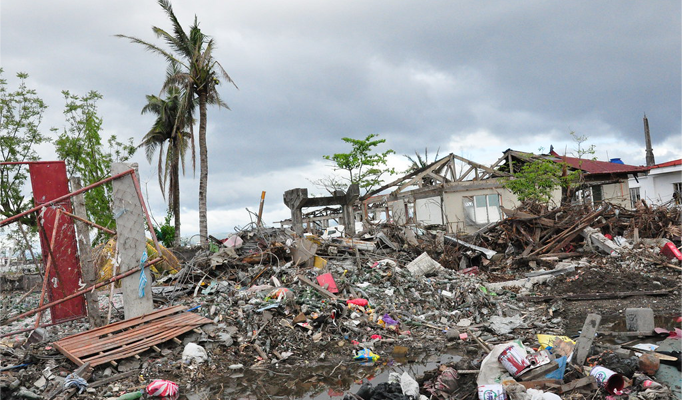
The Philippines is consistently identified as among the world’s most disaster-vulnerable countries, typically experiencing up to 20 tropical storms in a year. In 2025 alone, eight typhoons have claimed hundreds of lives, triggered mass flooding, and displaced millions of people across the country.
“Every dollar invested in disaster risk reduction and climate adaptation helps to protect lives in the event of erratic weather and minimizes the long-term costs of these crises,” says Foodgrains Bank executive director Andy Harrington. “By strengthening the resilience of rural communities that are highly vulnerable to disasters, this program will help support faster recovery and improve the livelihoods of local farming communities.”
Through this new program, three Foodgrains Bank members will work with their local partner organizations in the Philippines to enhance climate-resilient and climate-adaptive programming for 15,000 rural farming households in northern Luzon and eastern Visayas.
In these areas, increasing temperatures and changing rainfall patterns exacerbate agricultural vulnerability and food insecurity, with a disproportionate impact on women, girls, and other marginalized groups. Sea level rise threatens coastal communities, forcing families to relocate and taking away their livelihoods.
This program will support communities by improving resiliency to changing climate patterns and strengthening agri-food systems, through initiatives such as climate-smart innovations, improving market access, implementing savings groups, and fostering stronger collaboration in disaster preparedness with local authorities.
Projects will be implemented by ADRA Philippines (partner of ADRA Canada), Convoy of Hope (partner of Emergency Relief and Development Overseas), and E-CARE (partner of Alongside Hope).
“This initiative is about partnership – which is at the heart of the Foodgrains Bank mission – and brings together the deep local knowledge of Filipino partners and the technical expertise of Canadian organizations, along with the support of the Canadian government, to create sustainable solutions for generations to come. Together, we’re tackling the disaster risks that threaten food security and agri-food systems,” says Harrington.
The program is funded by Global Affairs Canada as part of its Disaster Risk Reduction initiative under the Indo-Pacific Strategy, with a five per cent match from Foodgrains Bank.
Canadian Foodgrains Bank is a partnership of 15 churches and church agencies working together to end hunger. In the 2024-25 budget year, the Foodgrains Bank provided $74.6 million of assistance for 1,176,111 people in 37 countries. Canadian Foodgrains Bank programs are undertaken with support from the Government of Canada provided through Global Affairs Canada. Assistance from the Foodgrains Bank is provided through its member agencies, which work with local partners in the developing world.
 Press Release
Leave a Reply