
As a young girl, I idolized Amelia Earhart. I was awe-struck by her sense of adventure, her courage for entering a risky male-dominated field, and excelling in her profession. How many women, I wondered, could understand the mechanics of an airplane, navigate and fly it? Earhart’s pioneering spirit, her passion for aviation and her knowledge and skill garnered high respect from her peers.
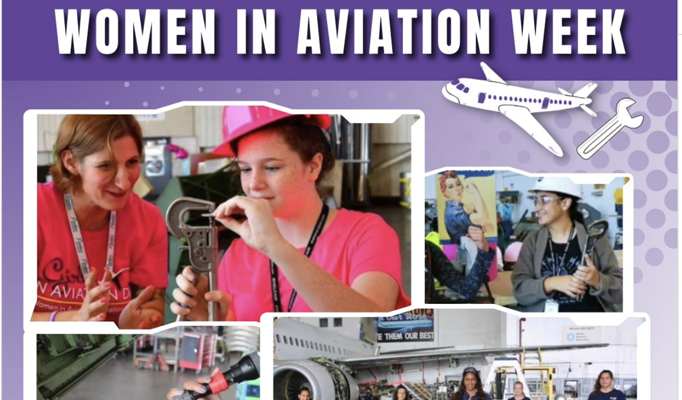
Women in Aviation Week, March 2 – 8, 2026 markeda time to celebrate the women who have chosen to pursue a career in aviation – as pilots, air traffic controllers, aircraft maintenance engineers, logistic personnel, dispatch operators, flight instructors, aerospace engineers, safety regulators or strategic managers.
Mission Aviation Fellowship (MAF) was co-founded by female aviator Betty Greene, a trailblazer who worked with WASP (Women Airforce Service Pilot) during WWII. Then in 1946, she began flying small aircraft to transport people and supplies to remote areas only accessible by air. On her first flight with MAF, she transported two Wycliffe translators from California to Mexico.
Today, MAF serves remote areas globally where needed, often saving lives – through medevac transport, or bringing food and supplies to disaster areas. Other missions involve ensuring educational supplies, Bibles, pastoral support, and clean water projects to areas that would not have access except for the pilots whose skill makes it possible.
Prairie Aviation Training Centre (PATC) is Canada’s primary link with MAF. Located in Three Hills, Alberta, PATC trains mature Christians for aviation work in God’s kingdom. Student pilots and maintenance engineers follow a comprehensive program that provides unique and resilient problem-solving skills. Lindsay Sytsma, MAF (Canada) strategist, says, “Having your private or commercial pilot’s license is not enough to be a mission aviator. “ Students at PATC go through rigorous training over and above the normal pilot skills; risk assessment and security training prepares them to handle any given situation that may arise. “It does take a very special person to be a mission aviator, and we make sure they are well prepared – that they feel they have the skills they need in order to serve in the places they are going to serve.” The job is demanding and the skills hard-earned, but Sytsma speaks about the infectious joy on the faces of the pilots when they talk about their work and what they’re able to accomplish. “To be able to do what they’re doing – fly into these remote, cut off areas and help people – there’s an amazing sense of joy and satisfaction.”
Women are essential to the industry and are massively under-represented according to Sytsma, who adds that opportunities are endless. “The aviation industry is its own entire ecosystem.” While the general public’s main intersection with aviation comes through commercial airlines, there is so much more to aviation. “It’s so vast, so broad, with so many opportunities, so many career trajectories out there. You don’t have to be a pilot…if you just love what airplanes can do…there’s tons of spaces and places for you as well.” She considers that while airplanes bring death and destruction in war, why not use them to provide life-giving hope for humanity’s benefit instead?
Sytsma leaves me with a story: Deb, a woman just beginning her career in Lesotho has been transporting pregnant women from remote areas for medical care for the safety of mother and child. When they see a female pilot, these women’s eyes grow wide. Most of them have never seen a female pilot, and none of them have ever conceived of the idea that they might have skills and ability to do the same. “This is exactly what we want for women in aviation,” Sytsma says. “We want young girls and women to see other women in the industry and say, ‘I could do that; it’s possible for me’, so that we can raise up that pipeline. I just think of what an inspiration [Deb] must be to the women and girls who fly in that aircraft who said they’d never seen a female pilot.”
Systma hopes that highlighting Women in Aviation Week will provoke curiosity in young girls and women, who are intrigued by the aviation industry, whether in the commercial flight arena or something outside of the spotlight, like MAF.
To learn more, see https://maf.ca/
 Marion Van Driel delights in her roles as a wife, mother and grandmother; her soul is fed by both composing and composting. Music, words, form and colour are ingredients on which she thrives. She considers her garden a gift where family and friends gather to visit, heal, reflect and celebrate. Called as writer, artist, worship leader, gardener and (sometimes reluctant) follower of Christ, she bears evidence of God’s abundant grace without which she’d be someone else entirely.
Leave a Reply