
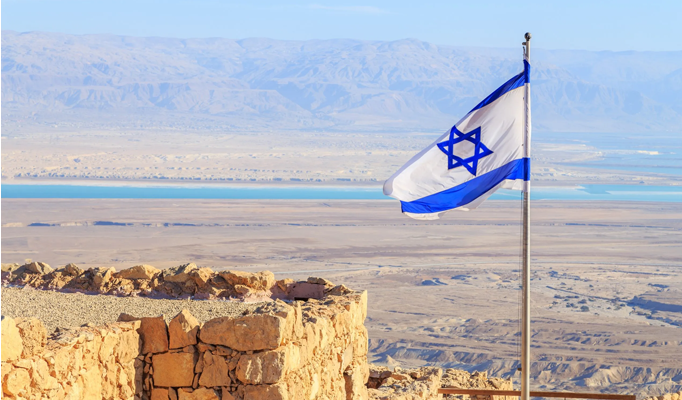
Does Israel still matter to God, and does Israel still matter to believers in Jesus? That question is at the heart of this series.
In previous articles, we explored God’s unbreakable covenant with Abraham, and we examined modern Israel as a fulfillment of biblical prophecy. Today, we bring those two themes together – the covenant and the land – by focusing on the significance of God’s name. In Ezekiel 36, God declares that He will bring Israel back to the Promised Land for the sake of His holy name – not because Israel has faithfully kept the requirements of the Mosaic covenant in exile, for they had not, but for the sake of His holy name.
This requires some explanation. God entered into several covenants, including the New Covenant, with Israel. The covenant with Abraham was guaranteed by God alone: Israel would be His family forever, and the land would be an everlasting inheritance. The covenant with Moses, however, was conditional. Israel would remain blessed and be allowed to dwell in the land as long as they obeyed the Mosaic Law. Disobedience and idolatry would result in exile – but not in permanent exile – because of the prior, unconditional covenant with Abraham.
This brings us back to God’s name. “I will bring them back for the sake of My holy name.” While Israel was in exile, God’s name was being profaned among the nations. The promise of the land appeared to have failed. Was the God of Israel truly the one and only God?
So, what is God’s name? Of course, He has many names, but He has one primary name. In Exodus chapter 3, at the burning bush, God said to Moses, “Say this to the people of Israel: ‘The LORD – YHWH – the God of your fathers, the God of Abraham, the God of Isaac, and the God of Jacob, has sent me to you.’ This is My name forever, and thus I am to be remembered throughout all generations.”
The Hebrew Scriptures use this name – Yahweh – more than 7,700 times. At some time, in a very interesting development, the rabbis concluded that God’s name was too holy to be spoken aloud. As a result, when the Scriptures were read – and this practice continues to this day – whenever the name Yahweh appears, the reader substitutes Adonai (Lord) or HaShem (the Name).
Names have meaning and may reveal character. In Exodus 34, God explains to Moses what the name YHWH signifies. Literally, it means, “I AM WHO I AM.” But in Exodus 34, when Moses asks God to show him His glory – to reveal Himself so that Moses could lead a rebellious people who had just fashioned the golden calf – this is how God responds:
“I am YHWH, YHWH, the LORD, the LORD, gracious and merciful, slow to anger and abounding in steadfast love and faithfulness, keeping steadfast love for a thousand generations, forgiving iniquity and transgression and sin, but who will by no means clear the guilty, visiting the iniquity of the fathers on the children and the children’s children, to the third and the fourth generation.”
The rabbis refer to this passage as the Thirteen Attributes of God’s Mercy – mercy expressed in every direction: gracious, compassionate, slow to anger, forgiving iniquity. And this, God tells Moses, is who I am. I am a God of mercy. And in My mercy, I will bring My people home from exile, even though they do not deserve it – not for their sake, but for the sake of My holy name.
We have been looking at the connection between the nation of Israel today and the Israelites of the Bible. In many churches, it there is no connection being made at all. Just this past week, I heard of a pastor telling someone that Israel is no different from any other nation on earth.
But God’s covenant with Abraham and his family was everlasting, with the land of Canaan given as an everlasting possession. As God declares in Jeremiah chapter 31, “Only if the sun and the moon cease to be in the sky will Israel cease to be a nation before Me.” Has God broken His promises to Israel?
God’s very reputation is bound up in those promises. Can He – and will He – keep them? As we saw previously, God says through Ezekiel, “I will bring them back to the mountains of Israel for the sake of My holy name.” In doing so, He demonstrates that He is YHWH – gracious and merciful, slow to anger, and abounding in steadfast love, keeping His faithfulness for a thousand generations, which is to say, forever. I will not break my promises to Israel, I will not give up on her, though she has all too often been unfaithful to me.
This issue of God’s name and reputation is of utmost importance to Him. It is why Jesus teaches us to pray, “Hallowed be thy name.” In Ezekiel 36: 21, God says, “But I had concern for my holy name, which the house of Israel had profaned among the nations to which they came.”
Israel had been in exile for nearly two thousand years, driven out by the Romans in 135 CE, when God began to bring the Jewish people back in significant numbers during the 1880s – out of concern for His holy name. Today, there are roughly eight million Jews living in Israel, more than half of the Jewish population of the world, and they are still flocking home.
Pastors are not the only ones who deny that modern Israel is a work of God or a fulfillment of prophecy. On October 7, 2023, Muslim jihadists attacking the kibbutzim along the Gaza border and the Nova Music Festival accompanied their atrocities with cries of Allahu Akbar – “Allah is greater.” Their invasion was an attempt to sanctify the name of their god. They believe the land of Israel belongs to Allah because Muslims ruled it in past centuries. And so, at its core, the conflict raging in the Middle East today is a battle of the gods. The question being asked is this: Who is the true God?
Allah is not the true God, and we know this in part because the true God – YHWH – has preserved the descendants of Abraham, Isaac, and Jacob for four thousand years and is once again bringing them back to the land He promised would be theirs forever. The world is in turmoil over what God is doing in reestablishing Israel – not only among those who believe Allah is the true god, but also among many who believe there is no God at all.
The story of Israel confronts everyone who does not believe in the God of Abraham, Isaac, and Jacob. How has this small people endured through the centuries when the empires that sought to destroy them have all vanished? The Persian Empire of Esther’s day, the Greek Empire of the Maccabees, the Roman Empire of Jesus’ time – all have disappeared. Yet the Jewish people remain, with their faith in God, their Hebrew language, and now a restored nation-state in the land of Canaan.
Antisemitism is one response to this extraordinary perseverance and success. They are cheating. They are dishonest. They collude with one another to control the world’s banking systems. A biblical response is to recognize that God has chosen the Jewish people for His purposes and is preserving them until those purposes are fully accomplished. The road has not been straight, but God remains faithful to them – and He invites believers in Jesus to remain faithful to them as well.
 Donald James (Rev.) BA,MDiv is the National Director of Bridges for Peace Canada
Leave a Reply